
How to Choose Wound Care Products & Dressings
Caring for a wound at home — your own or a loved one's — can feel overwhelming the first time you stand in front of a shelf (or a screen) full of dressings with names you've never heard before. This guide walks through the main types of wound care products, how to think about choosing between them, and what to check before you order, so you can buy with confidence instead of guesswork.
What "Wound Care Products" Actually Covers
"Wound care products" is a broad category that includes everything used to clean, protect, and help a wound heal: wound washes and cleansers, various types of dressings (the covering you place directly over a wound), tapes and wraps to hold a dressing in place, and specialty items for wounds that need extra attention, like pressure injuries or surgical incisions. The right choice depends mostly on three things: how much fluid the wound is producing (called "exudate" — simply the fluid, pus, or drainage a healing wound naturally releases), where the wound is located on the body, and how sensitive the surrounding skin is.
Types of Wound Dressings
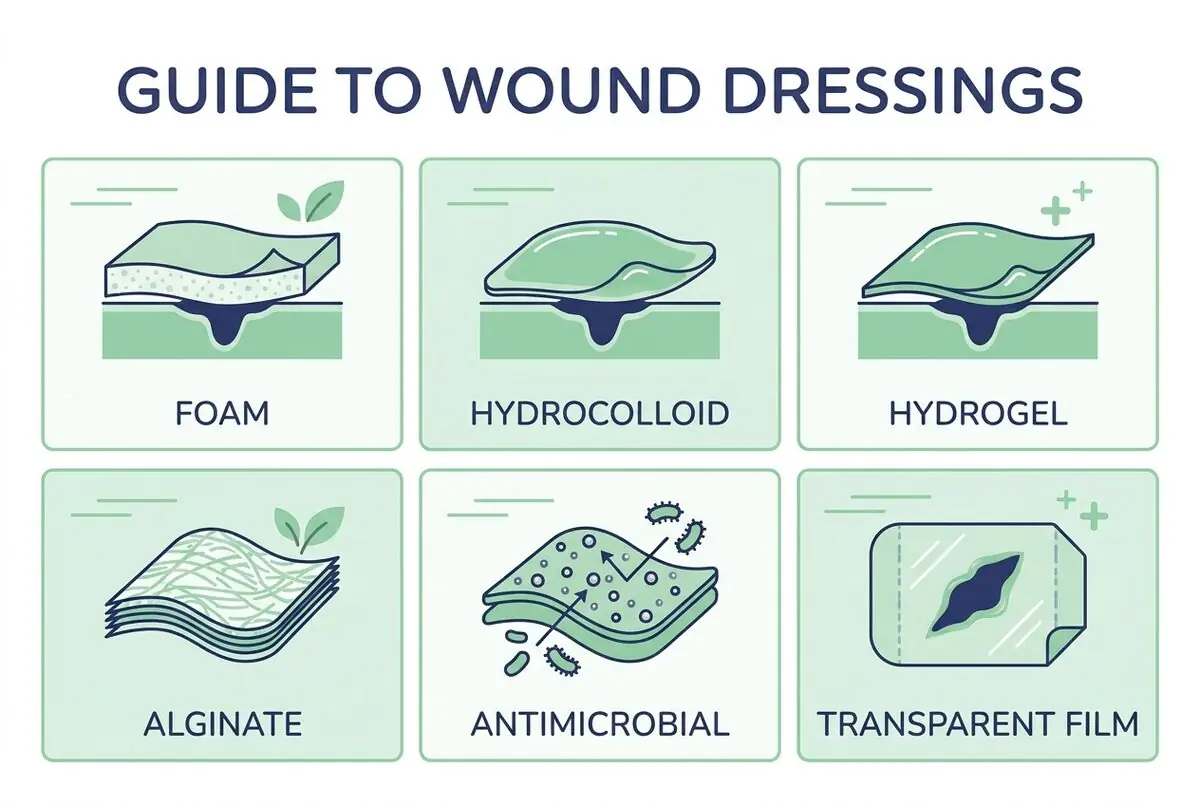
There isn't one "best" dressing — different wounds need different coverings:
Foam dressings are soft, cushioned pads that absorb a moderate to heavy amount of fluid while keeping the wound protected from bumps and pressure.
Hydrocolloid dressings have a gel-forming layer that reacts with wound fluid to create a moist, protective barrier (moist healing tends to work better and be less painful than letting a wound dry out and scab over). They work well for lighter-draining wounds and can often stay in place for several days at a time.
Hydrogel dressings add moisture to a wound that's dry or has very little drainage, which helps the body's healing process along.
Alginate dressings are made from a seaweed-derived fiber and are built specifically for heavily draining wounds — they can absorb a large amount of fluid and turn into a soft gel as they do, which also makes them easier and less painful to remove.
Antimicrobial or antimicrobial-infused dressings (antimicrobial simply means "designed to help reduce the growth of bacteria and other microbes on or near the wound") are used when a wound is at higher risk of infection, or when a clinician wants an extra layer of protection while it heals.
Transparent film dressings are thin, see-through coverings that let you keep an eye on a wound without removing the dressing — useful for lighter wounds, IV sites, or as a secondary layer over another dressing.
Wound Washes and Cleansers
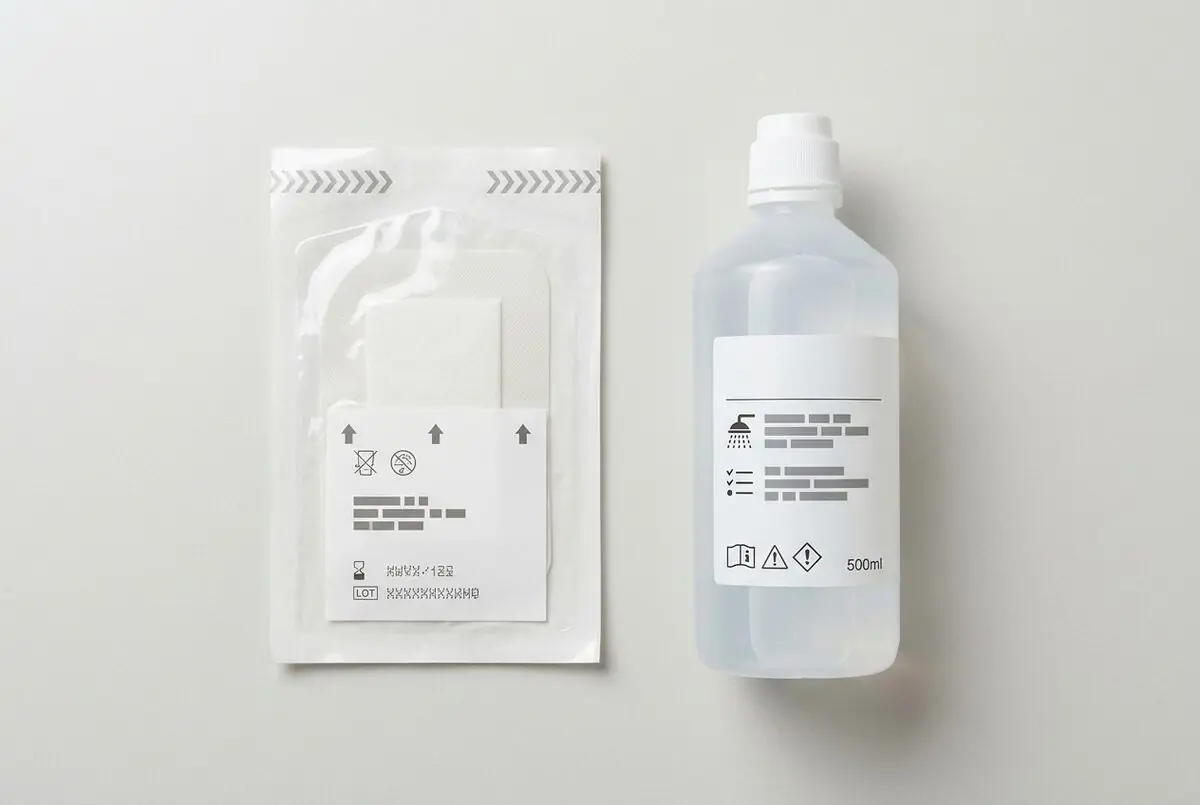
Before any dressing goes on, most wounds need to be cleaned. Wound washes and cleansers are gentle, sterile (or near-sterile) rinses formulated specifically for broken skin — built to clean without the irritation that regular soap or tap water can cause on an open wound. Look for a wash labeled for the type of wound you're treating, and always check with a clinician if you're unsure which one is appropriate.
How to Choose: What to Check Before You Order
How much is the wound draining? Lightly draining wounds generally do well with hydrocolloid or hydrogel dressings; moderately to heavily draining wounds usually call for foam or alginate dressings.
Where is the wound located? A dressing for a joint needs to flex and stay put through movement; some product lines are specifically shaped or sized for tricky locations like heels, elbows, or sacral (lower back/tailbone) areas.
How sensitive is the surrounding skin? Older adults, people with diabetes, or anyone with fragile skin may need a gentler adhesive or a non-adhesive dressing held in place with wrap or tape instead.
How often will the dressing need to be changed? Some dressings stay in place for several days; others are meant for daily changes, depending on drainage and clinician recommendation.
Is there a risk of infection? A surgical incision, a diabetic wound, or one already showing signs of infection may call for an antimicrobial dressing or wash.
Sterile versus non-sterile? Many products come in sterile, individually wrapped single-use units, which matters most for fresh wounds, surgical sites, or anyone with a compromised immune system.
When in doubt, the safest step is always to check with the prescribing clinician, wound care nurse, or treating doctor.
Buying for a Facility vs. Buying for Home Care
If you're ordering for a clinic, long-term care facility, or home health agency, you likely already know the unit of measure your team standardly orders, and you may be managing a recurring reorder schedule. If you're a caregiver ordering for the first time, start smaller: buy a modest quantity of whichever dressing type your clinician has recommended, confirm it works well for the wound, and reorder in bulk once you know it's the right fit.
This information is not a substitute for professional medical advice, diagnosis, or treatment. Always ask your doctor or other qualified healthcare provider which wound care products are right for your specific situation. In an emergency, call 911.
Frequently Asked Questions
What wound care products do I actually need to get started? At minimum, most people need a wound wash or cleanser to clean the area, an appropriate dressing to cover and protect it, and tape or a wrap to hold the dressing in place. Your clinician's instructions are the best starting point.
What's the best wound wash to use? There's no single "best" wound wash for every situation — it depends on the type of wound and what your clinician has recommended. Look for a wash formulated specifically for wound cleansing, and check the label for its intended use before buying.
What are the different types of wound dressings, and how do I know which one I need? The main types are foam, hydrocolloid, hydrogel, alginate, antimicrobial, and transparent film dressings — each suited to a different level of wound drainage and healing stage. See "Types of Wound Dressings" above, and check with a clinician if you're not sure which applies.
What makes a dressing "advanced" wound care, and is it different from a regular bandage? Advanced wound care dressings are purpose-built products — like hydrocolloids, foams, alginates, and antimicrobial dressings — designed to manage moisture, protect against infection, and support healing in ways a basic adhesive bandage isn't built to do.
How often should a wound dressing be changed? It depends on the dressing type and the wound itself. Some dressings stay in place for several days; others need daily changes. Your clinician's instructions should always take priority.
Can I buy wound care supplies in bulk for a facility or clinic? Yes — many wound care products are available by the box or case for facilities, long-term care settings, and home health agencies that reorder regularly. Shop our wound care category to see current options and unit-of-measure choices.
Ready to find the right dressing or wound wash for your situation? Shop our wound care category to browse Great Oak Medical's full range of wound care supplies, or reach out to our customer care team if you need help narrowing down your options.