
How to Choose a Pulse Oximeter
If your doctor has recommended keeping an eye on your oxygen levels at home — or you just want a simple way to check in on your own health — a pulse oximeter is one of the easiest medical devices to use. This guide explains what the device actually measures, what affects how accurate a reading is, and what to look for before you buy, so you can choose the right one with confidence.
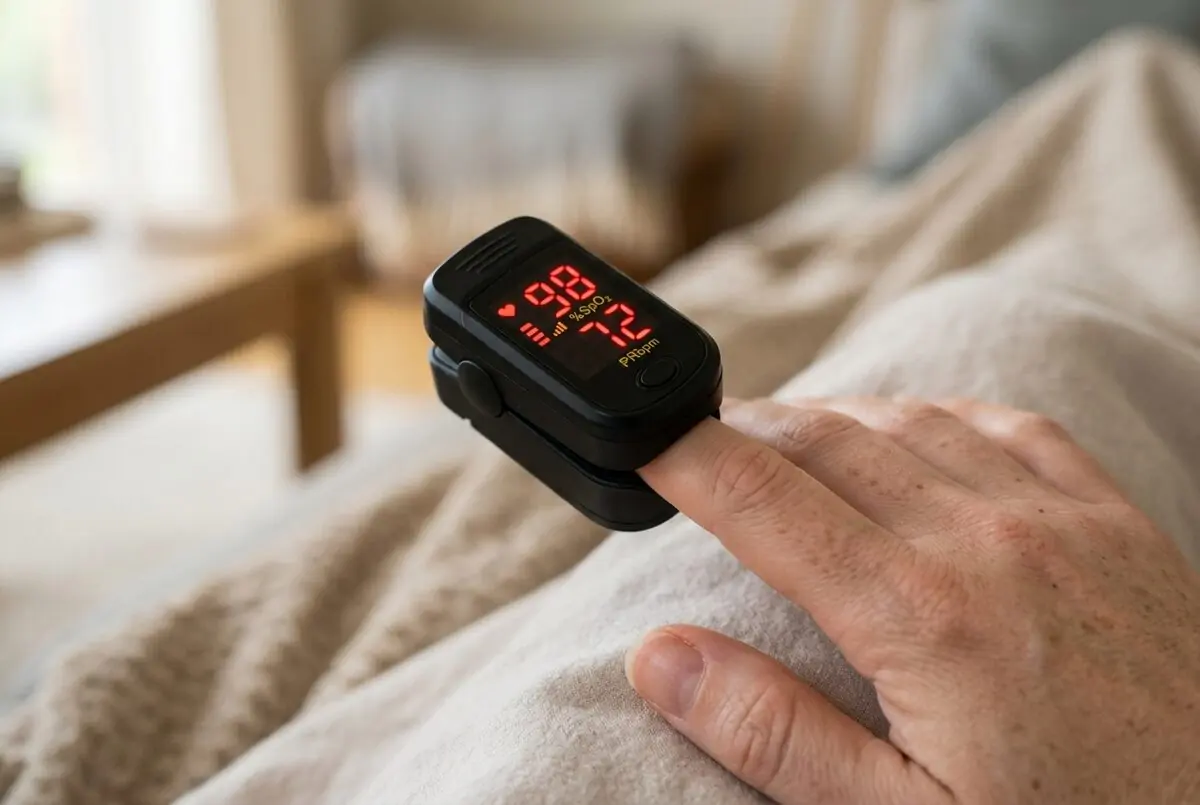
What a Pulse Oximeter Measures
A pulse oximeter is a small device, usually clipped onto a fingertip, that estimates two things at once: your blood oxygen saturation (called "SpO2" — simply the percentage of oxygen your red blood cells are carrying, out of the maximum they could carry) and your pulse rate (how many times your heart beats per minute, read from the same fingertip sensor rather than a pulse felt by hand). It does this by shining two wavelengths of light through your fingertip and measuring how much of each wavelength passes through — oxygen-rich blood and oxygen-poor blood absorb light differently, and the device calculates SpO2 from that difference.
A healthy SpO2 reading for most people is generally in the 95-100% range, though what's "normal" can vary by individual and by any underlying health condition — your doctor is the right source for what your own target range should be, not a general guideline.
Accuracy and What Can Affect a Reading
A pulse oximeter is a helpful screening tool, but a number of everyday factors can throw a reading off:
Cold hands or poor circulation can weaken the signal the device reads, sometimes producing a lower or less stable reading than your actual oxygen level.
Nail polish, acrylic nails, or fake nails can block or scatter the light the sensor uses, which is why many devices recommend a bare, clean fingernail.
Movement during the reading can interfere with the sensor's ability to get a stable reading, so it helps to stay still for the few seconds it takes.
Skin tone and perfusion (perfusion simply means how well blood is flowing to the area being measured) can also affect reading accuracy in some devices; buying from a reputable brand with documented accuracy testing matters more than price alone.
Where you place it matters too — a sensor that's too loose or on a finger that's too thick or too thin for the device's fit can give an unreliable reading.
If a reading looks unusually low or doesn't match how you feel, try a different finger, warm your hands, and take a second reading before assuming something is wrong — and contact your doctor with any reading that concerns you.
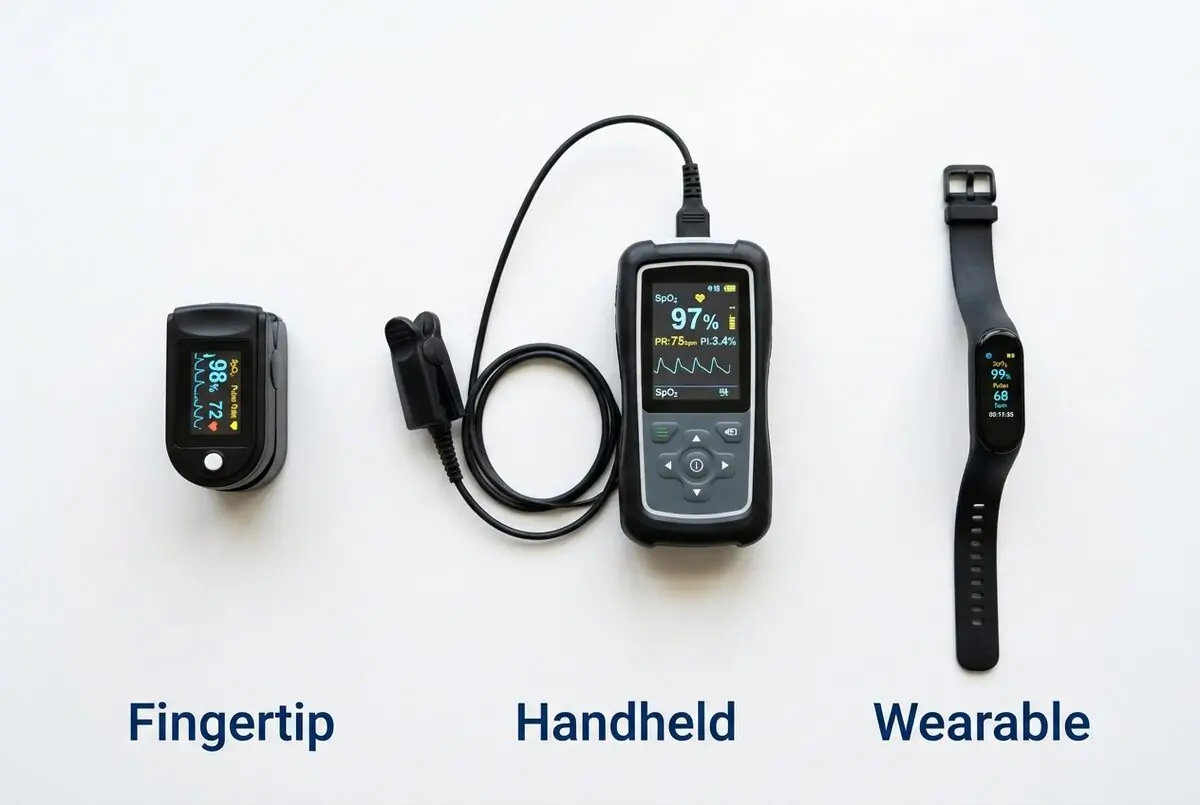
Choosing the Right Type: Fingertip, Handheld, or Wearable
Fingertip pulse oximeters are the most common and most affordable option for home use. They clip onto a finger, display a reading in seconds, and are small enough to keep in a drawer or travel bag. This is the right choice for most people who want occasional spot-checks.
Handheld pulse oximeters are larger, often used in clinical or home-health settings, and may offer more advanced features like data logging, alarms for readings outside a set range, or a connected probe that can be used on an earlobe or toe instead of just a finger.
Wearable pulse oximeters (worn on the wrist or as a ring, often continuously through the day or overnight) are designed for ongoing or sleep monitoring rather than quick spot-checks, often chosen on a clinician's recommendation.
Features to Look For
A few features are worth comparing across models: a clear, easy-to-read display (some have adjustable brightness or larger digits, which matters for anyone with vision difficulty); a pediatric-sized sensor if the device will be used on a child's smaller finger, since adult sensors may not get an accurate reading on a small finger; battery type and battery life; and, for handheld or wearable models, any data-logging or alarm features if ongoing tracking is the goal rather than occasional checks.
Who Should Consider a Pulse Oximeter
A pulse oximeter can be a useful tool for people managing a chronic respiratory or cardiac condition under a doctor's guidance, caregivers monitoring a loved one's recovery at home, athletes or people at high altitude who want to track their own oxygen levels, and anyone whose doctor has asked them to monitor their oxygen saturation during an illness or recovery period. It is not a diagnostic tool on its own, and a normal-looking reading does not rule out a health problem that needs medical attention.
How to Choose: A Quick Checklist
Before ordering, confirm: whether a simple fingertip model fits your needs or whether a handheld/wearable device with logging and alarms is a better fit for ongoing monitoring; whether a pediatric sensor is needed; display readability; and, most importantly, what reading range and monitoring plan your doctor has actually recommended for your situation.
This information is not a substitute for professional medical advice, diagnosis, or treatment. A pulse oximeter reading does not replace a clinical evaluation. Always ask your doctor or other qualified healthcare provider about what your target oxygen levels should be and how to respond to a reading that concerns you. In an emergency, call 911.
Frequently Asked Questions
What should my pulse oximeter reading be? A healthy SpO2 reading for most people is generally 95-100%, but the right target for you depends on your own health and any condition your doctor is monitoring. Always confirm your target range with your doctor rather than relying on a general number.
Why does my fingertip pulse oximeter give a different reading each time I check? Small changes between readings are normal and often come down to things like finger position, movement, cold hands, or nail polish interfering with the sensor. If readings vary a lot or seem consistently low, try warming your hands, removing nail polish, staying still during the reading, and checking a different finger — and talk to your doctor if the readings still concern you.
Does nail polish affect a pulse oximeter reading? Yes — nail polish, acrylics, or fake nails can block or scatter the light the sensor uses to take its reading, which can lead to an inaccurate result. Using a bare, clean fingernail generally gives the most reliable reading.
What's the difference between a fingertip and a handheld pulse oximeter? A fingertip pulse oximeter is a small, affordable device for quick spot-checks at home. A handheld pulse oximeter is larger and often used for more frequent or detailed monitoring, sometimes with features like data logging or alarms, and is common in home-health or clinical settings.
Can a pulse oximeter be used on a child? Many pulse oximeters are designed and sized for adult fingers, which may not give an accurate reading on a child's smaller finger. If the device will be used on a child, look specifically for a pediatric-sized sensor rather than assuming an adult device will work.
Is a pulse oximeter the same as a heart rate monitor? Not exactly — a pulse oximeter measures both your pulse rate and your blood oxygen saturation (SpO2) from the same fingertip sensor, while a dedicated heart rate monitor typically only tracks pulse rate and doesn't measure oxygen levels at all.
Ready to find the right pulse oximeter for your needs? Shop our oximeters category to browse Great Oak Medical's full range of fingertip, handheld, and wearable pulse oximeters, or reach out to our customer care team if you have questions about choosing the right type.