
How to Choose a Home Blood Pressure Monitor
If your doctor has asked you to track your blood pressure at home, or you simply want to keep an eye on your own numbers, a home blood pressure monitor is one of the easiest tools to add to your routine. This guide explains what the numbers actually mean, how to pick between the main monitor types, and what matters most for getting an accurate reading, so you can shop with confidence.
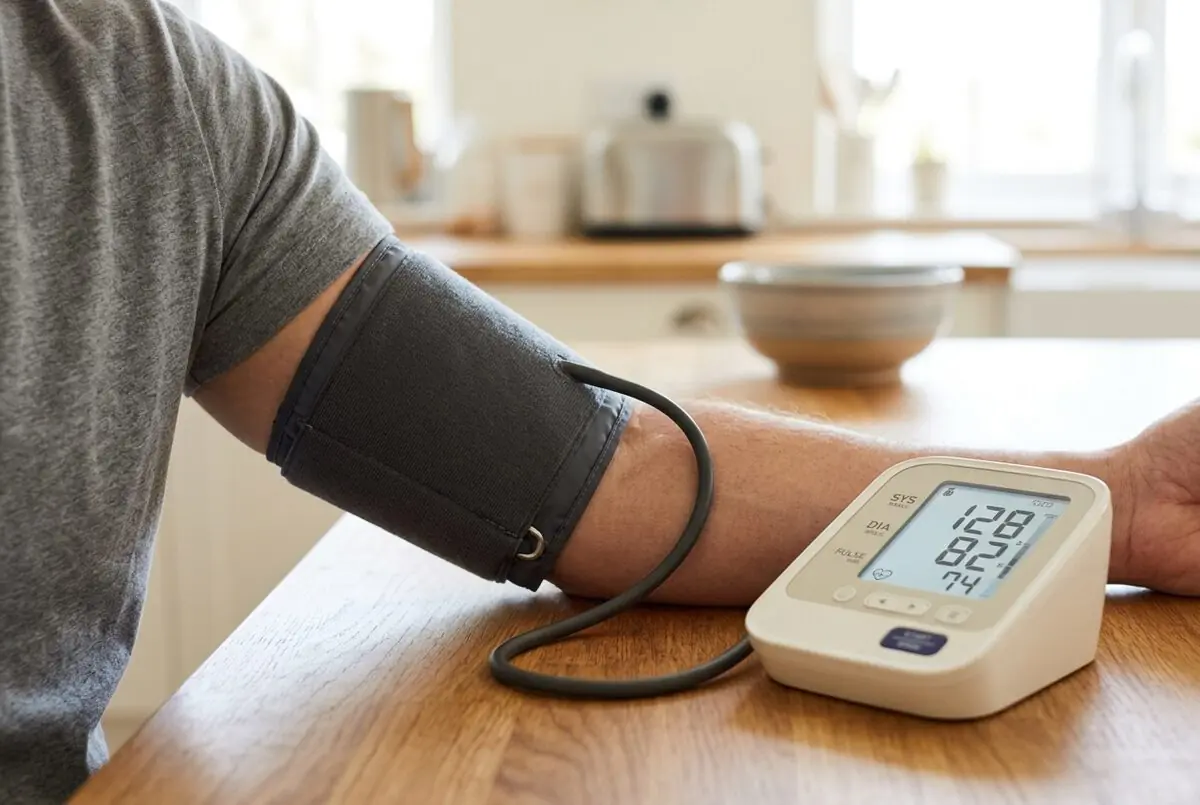
How a Home Blood Pressure Monitor Works, and What the Numbers Mean
A blood pressure monitor measures the pressure of blood pushing against your artery walls as your heart beats. Every reading gives you two numbers: systolic pressure (the higher number, measuring the pressure while your heart is actively beating) over diastolic pressure (the lower number, measuring the pressure while your heart is resting between beats). Both are measured in mmHg (millimeters of mercury — the unit used for blood pressure readings).
Most home monitors also display your pulse rate, and many higher-end models include irregular heartbeat detection — a feature that flags when your heartbeat pattern looks uneven, which can be worth mentioning to your doctor, though it is not a diagnosis on its own.
What counts as a healthy reading varies by individual, age, and any condition your doctor is already managing. Rather than comparing your numbers to a general chart, the most useful approach is to track your own numbers over time and share that log with your doctor, who can tell you what range is right for you.
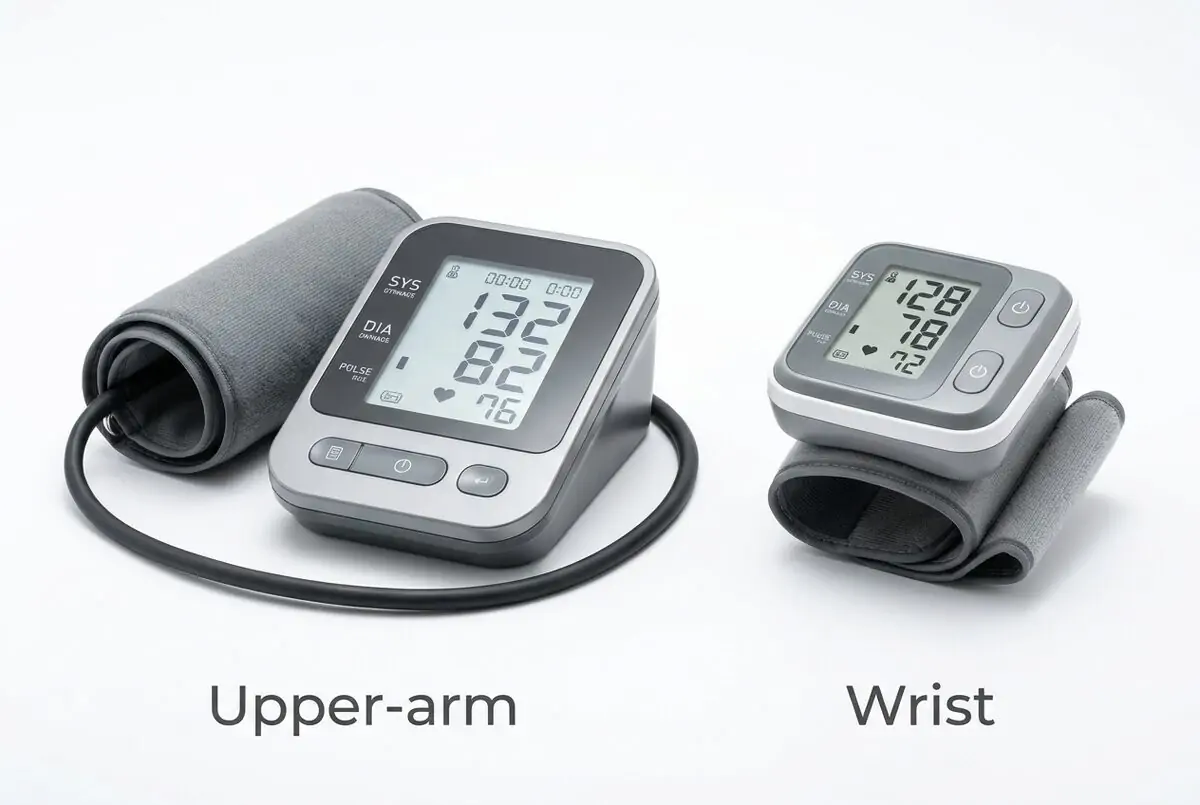
Upper-Arm vs. Wrist Monitors
Upper-arm monitors wrap a cuff around your upper arm and are generally considered the more accurate and consistent choice, since the upper arm's position relative to the heart makes for a more reliable reading. Most doctors and clinical guidelines recommend upper-arm monitors as the standard for home use.
Wrist monitors are smaller, often more portable, and can be easier to put on for some people, particularly those who find an upper-arm cuff uncomfortable. However, wrist readings are more sensitive to hand and wrist position during the reading, which can introduce more variability. If you choose a wrist monitor, following the positioning instructions closely (keeping your wrist at heart level) matters more than it does with an upper-arm cuff.
For most people, especially anyone monitoring a known condition under a doctor's guidance, an upper-arm monitor is the safer default choice.
Getting an Accurate Reading: Cuff Size and Technique
A monitor is only as accurate as the cuff fit and the technique used with it:
Cuff size matters more than most people expect. A cuff that's too small for your arm can produce a falsely high reading, and one that's too large can produce a falsely low reading. Most upper-arm monitors list a measurable arm-circumference range on the product page or in the cuff itself — measuring your upper arm circumference before ordering is the single best way to get this right the first time.
Positioning affects the result. Readings are most accurate when you're seated with your back supported, feet flat on the floor, and your arm resting at heart level (a table or armrest works well). Avoid taking a reading right after exercise, caffeine, or a stressful conversation, since all of these can temporarily raise the number.
Consistency helps you track trends. Taking readings at the same time of day, in the same position, with the same arm, gives you a more useful pattern to share with your doctor than a single reading taken under different conditions each time.
Features to Look For
Irregular heartbeat detection — flags an uneven heartbeat pattern during the reading, worth discussing with your doctor if it appears consistently.
Multi-user memory — stores separate reading histories for more than one person, useful in a household where more than one person is tracking their blood pressure on the same device.
App connectivity — some monitors sync readings to a smartphone app automatically, which can make it easier to share a longer history with your doctor than writing numbers down by hand.
Display readability — a large, backlit display matters for anyone checking their numbers without reading glasses nearby, or in low light.
Averaging mode — some monitors automatically average several readings taken a minute or two apart, which can smooth out the natural reading-to-reading variation.
Who Should Consider Monitoring at Home
Home blood pressure monitoring is commonly recommended for people managing high blood pressure or another cardiovascular condition under a doctor's care, people whose doctor wants a fuller picture than an occasional in-office reading can provide, and anyone who simply wants to understand their own numbers better over time. It is a tracking tool, not a diagnostic one — a single reading, high or low, is not something to interpret on your own, and any reading that concerns you is worth a call to your doctor rather than a guess.
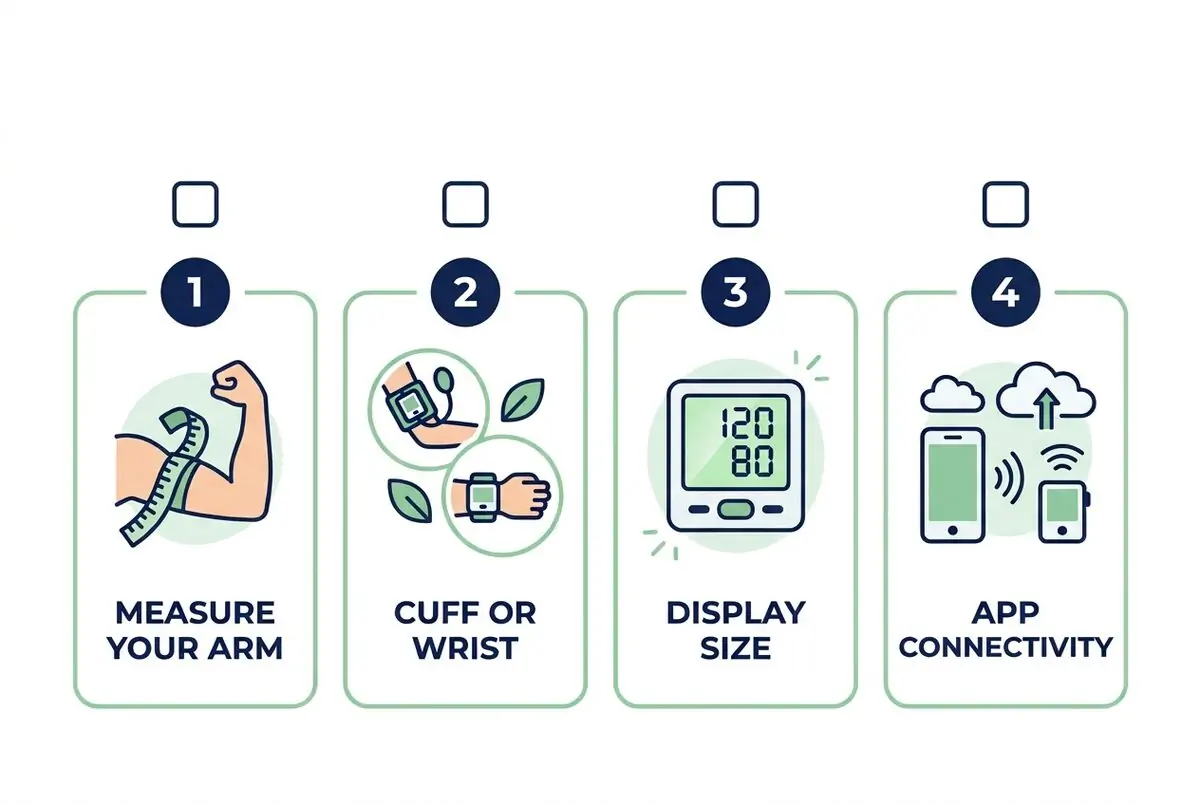
How to Choose: A Quick Checklist
Before ordering, it helps to confirm: an accurate upper-arm circumference measurement (so the cuff fits correctly); whether an upper-arm or wrist style best fits your needs, knowing upper-arm is the more broadly recommended default; whether features like irregular heartbeat detection, multi-user memory, or app connectivity matter for your situation; and what monitoring schedule your doctor has actually recommended.
This information is not a substitute for professional medical advice, diagnosis, or treatment. A home blood pressure reading does not replace a clinical evaluation. Always ask your doctor or other qualified healthcare provider about your target blood pressure range and how to respond to a reading that concerns you. In an emergency, call 911.
Frequently Asked Questions
What is a normal blood pressure reading? What counts as "normal" varies by individual, age, and any condition your doctor is monitoring. Rather than comparing to a general chart, track your own readings over time and discuss your target range directly with your doctor.
Are wrist blood pressure monitors as accurate as upper-arm monitors? Generally, no — upper-arm monitors are considered the more accurate and consistent choice for home use, and most doctors recommend them as the standard. Wrist monitors can work well but are more sensitive to hand and wrist position during the reading.
What size blood pressure cuff do I need? Cuff size should match your upper arm circumference — a cuff that's too small or too large can produce an inaccurate reading. Measure your upper arm before ordering and check the product's stated size range.
How often should I check my blood pressure at home? This depends on why you're monitoring. Many people check once or twice a day at consistent times, but the right schedule for you should come from your doctor rather than a general guideline.
Why do my readings vary between my left arm and right arm, or throughout the day? Some difference between arms is common, and blood pressure naturally fluctuates throughout the day based on activity, stress, caffeine, and other factors. Taking readings consistently (same arm, same time of day, same seated position) gives you a more useful pattern than comparing single readings taken under different conditions.
What does "irregular heartbeat detection" mean on a blood pressure monitor? It's a feature that flags when your heartbeat pattern looks uneven during the reading. It is not a diagnosis — if it appears consistently, it's worth mentioning to your doctor.
Ready to find the right home blood pressure monitor for your needs? Shop our blood pressure category to browse Great Oak Medical's full range of upper-arm and wrist monitors, or reach out to our customer care team if you have questions about choosing the right type.