
How to Choose Compression Stockings
If your doctor has recommended compression stockings — or you're considering them for tired, achy, or swollen legs — the sheer number of styles, sizes, and compression levels can be confusing. This guide breaks down what compression stockings actually do, how to pick the right strength and fit, and what to check before you order, so you can buy with confidence.
What Compression Stockings Do
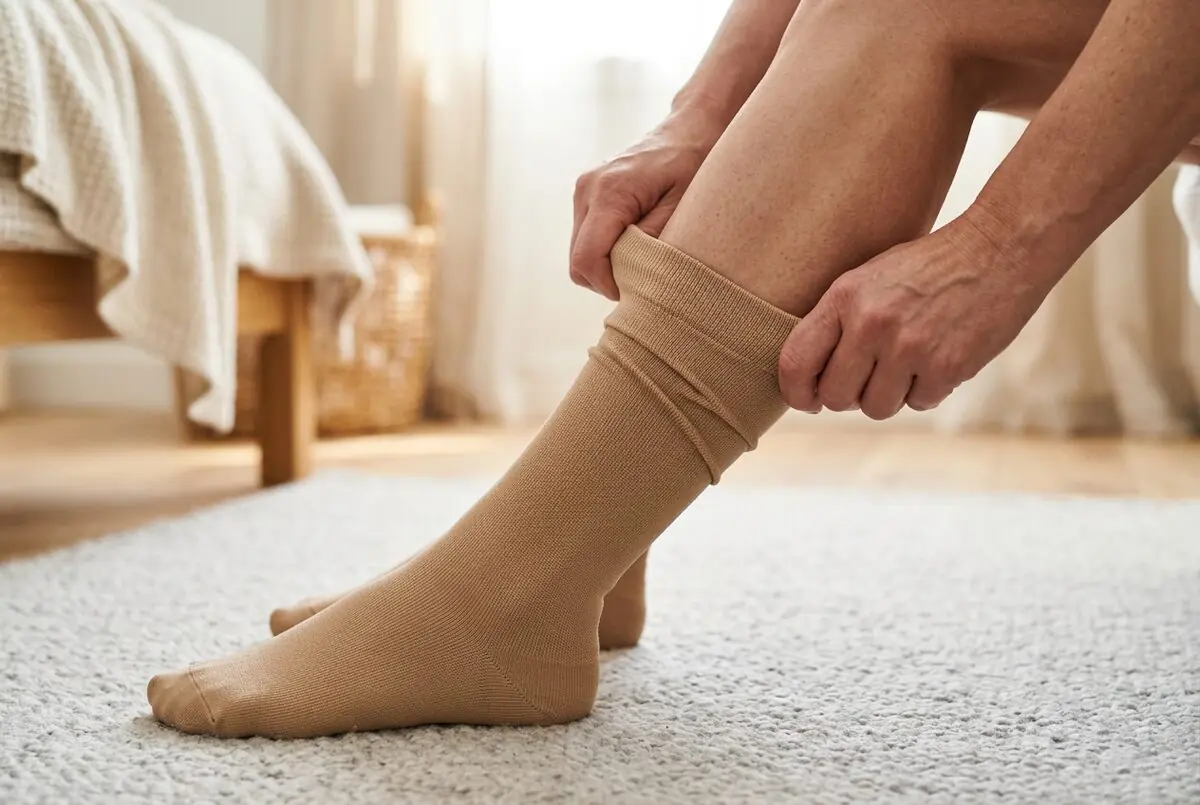
Compression stockings are specially designed hosiery that apply gentle, graduated pressure to your legs — meaning the squeeze is strongest at the ankle and gradually loosens as it moves up the leg. This graduated pressure helps push blood back up toward the heart, which can ease swelling (called "edema" — simply fluid buildup in the tissue), reduce leg fatigue, and support people managing conditions like venous insufficiency (a common condition where the leg veins have trouble moving blood efficiently back to the heart, which can cause swelling, aching, or varicose veins). They're also commonly recommended during long flights or after certain surgeries, to help lower the risk of blood clots.
Compression stockings are not a one-size-fits-all product. The right choice depends on three things: how much compression you need, what size and length fits your leg, and which style is most comfortable and practical for daily wear.
Understanding Compression Levels (mmHg)
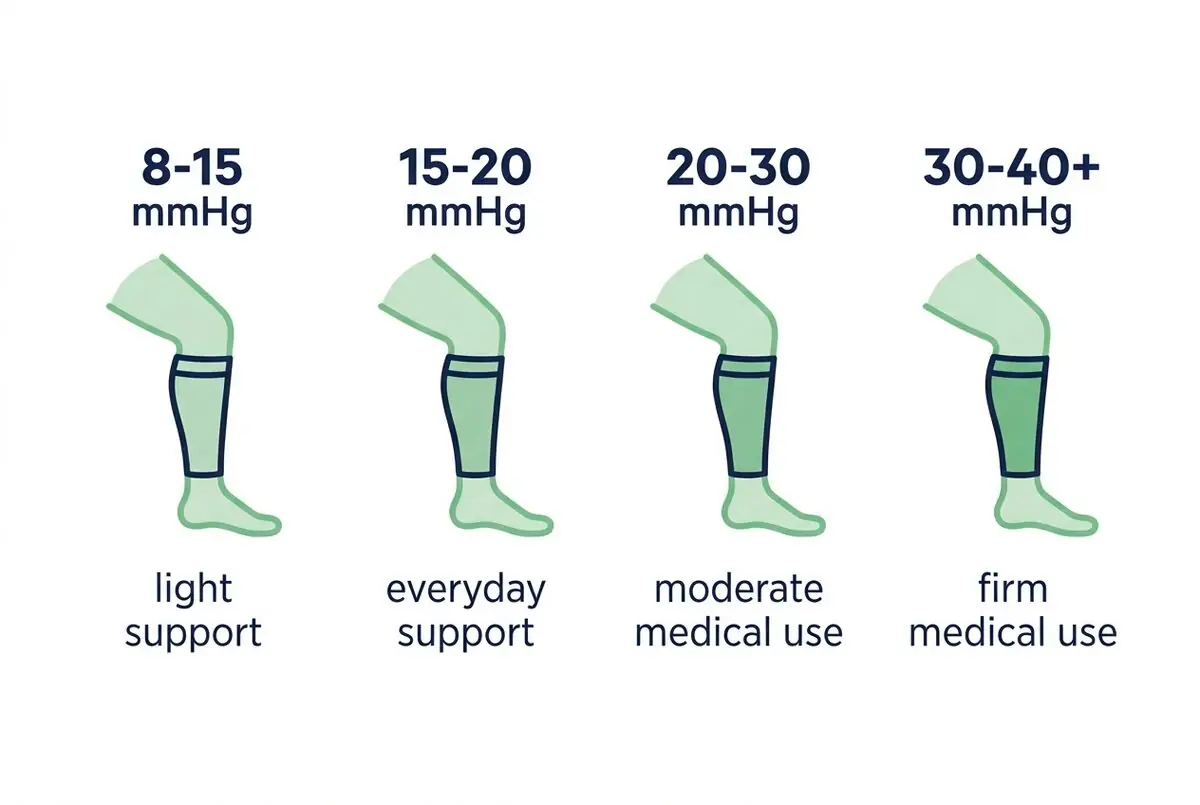
Compression strength is measured in mmHg (millimeters of mercury — the same unit used for blood pressure, here describing how much squeeze the fabric applies). The higher the number, the firmer the compression:
8-15 mmHg (mild): Available over the counter, often chosen for mild tired or achy legs, or for everyday comfort during travel or long periods of standing.
15-20 mmHg (moderate): A common over-the-counter choice for mild swelling, varicose veins, or minor leg fatigue.
20-30 mmHg (firm): Often recommended by a doctor for moderate swelling, varicose veins, or after certain procedures. This is a frequently prescribed starting strength.
30-40 mmHg and above (extra firm): Typically reserved for more significant medical needs and usually recommended and monitored by a physician.
Because higher compression levels are generally tied to specific medical needs, it's always best to confirm the right strength with your doctor before ordering — especially at 20-30 mmHg and above.
Sizing and Fit
Compression stockings only work as intended when they fit correctly — too loose and they won't apply enough pressure where it's needed; too tight and they can be uncomfortable or even restrict circulation. Most brands size by measuring your ankle circumference, calf circumference, and leg length (and for thigh-high or pantyhose styles, thigh circumference as well). Measurements are usually taken first thing in the morning, before swelling builds up over the course of the day, for the most accurate fit. Check the sizing chart on each product page before ordering, since sizing can vary somewhat between manufacturers.
Choosing a Style: Knee-High, Thigh-High, or Pantyhose
Knee-high stockings are the most common style, covering from the foot to just below the knee. They're a good fit for swelling or discomfort that's concentrated in the lower leg and ankle.
Thigh-high stockings extend up to the thigh and are often recommended when compression is needed higher up the leg, or for people who find knee-highs tend to slide down.
Pantyhose-style (waist-high) stockings provide compression over the entire leg and are sometimes recommended after certain surgeries or for conditions affecting the upper leg or pelvic area.
Open-Toe vs. Closed-Toe
Closed-toe stockings fully cover the foot, similar to a regular sock, and are a common everyday choice. Open-toe stockings leave the toes exposed, which can be more comfortable for people with foot sensitivity, certain foot conditions, or who simply prefer the feel — and they make it easier to wear your own socks or sandals over them if needed. Neither style is "better" overall — it comes down to comfort, any foot-specific needs, and personal preference.
Caring for Your Compression Stockings
Most compression stockings should be hand-washed or machine-washed on a gentle cycle in cool water, then air-dried — high heat from a dryer can break down the elastic fibers that create the graduated compression, shortening the garment's life. Because the compression-giving fibers do wear out gradually with regular use and washing, many people replace their stockings every few months, depending on how often they're worn.
How to Choose: A Quick Checklist
Before ordering, confirm: the compression level your doctor has recommended (or, for mild everyday comfort, a level you're comfortable choosing yourself); accurate morning measurements of ankle, calf, and if needed, thigh; the length that matches where you need support; and open-toe or closed-toe based on comfort and foot needs. When in doubt about compression level, your doctor or a pharmacist is the best resource — this guide is meant to help you understand the options, not replace medical advice.
This information is not a substitute for professional medical advice, diagnosis, or treatment. Always ask your doctor or other qualified healthcare provider before choosing a compression level, especially 20-30 mmHg or higher. In an emergency, call 911.
Frequently Asked Questions
What compression level should I get for swollen legs? It depends on the cause and severity of the swelling. Mild, everyday leg fatigue is often managed with 8-15 or 15-20 mmHg, available without a prescription. More significant swelling or a diagnosed condition like venous insufficiency is often managed at 20-30 mmHg or higher, which should be chosen with your doctor's guidance.
How do I measure my leg for compression stockings? Measure your ankle circumference, calf circumference, and leg length (plus thigh circumference for thigh-high or pantyhose styles) first thing in the morning, before any swelling builds up during the day. Compare your measurements to the specific sizing chart for the product you're considering, since sizing varies by brand.
What's the difference between open-toe and closed-toe compression stockings? Closed-toe stockings cover the entire foot like a regular sock; open-toe styles leave the toes exposed. Both provide the same graduated compression up the leg — the choice comes down to comfort, foot sensitivity, and whether you want to wear socks or sandals over them.
How many hours a day should I wear compression stockings? This varies by individual and by why they were recommended. Many people wear them during waking hours and remove them before bed, but your doctor's specific instructions should always take priority, especially for higher compression levels.
How do I put on compression stockings without them being so hard to get on? Turning the stocking inside-out down to the heel before putting it on, then rolling it up the leg rather than pulling it on like a regular sock, makes the process easier for most people. Applying them first thing in the morning, before any swelling develops, also helps.
How often do I need to replace compression stockings? Because the elastic fibers that create graduated compression wear out with regular washing and wear, many people replace their stockings every few months. Checking how well a pair still holds its compression over time is a good way to know when it's time for a new pair.
Ready to find the right compression level and fit for your needs? Shop our compression garments category to browse Great Oak Medical's full range of compression stockings, or reach out to our customer care team if you have questions about sizing or style.